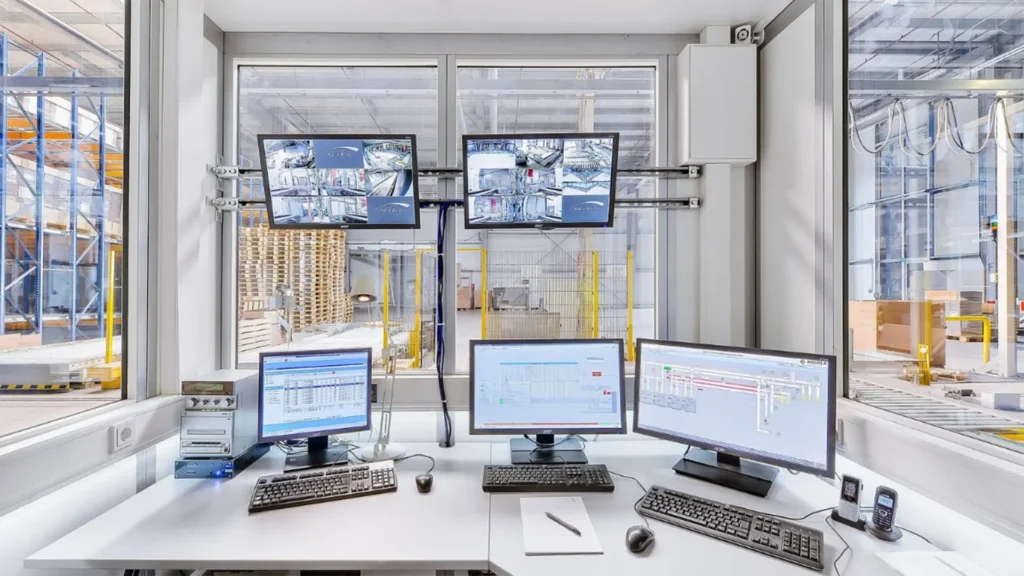
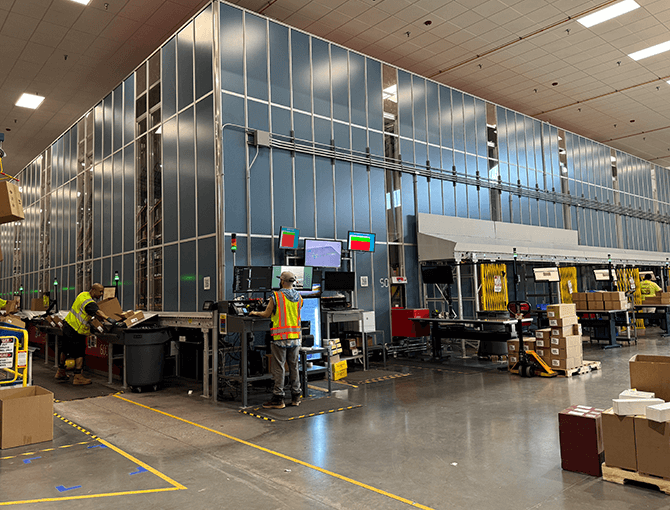
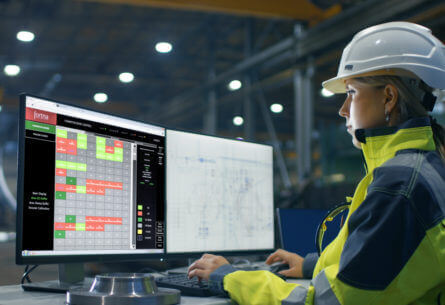
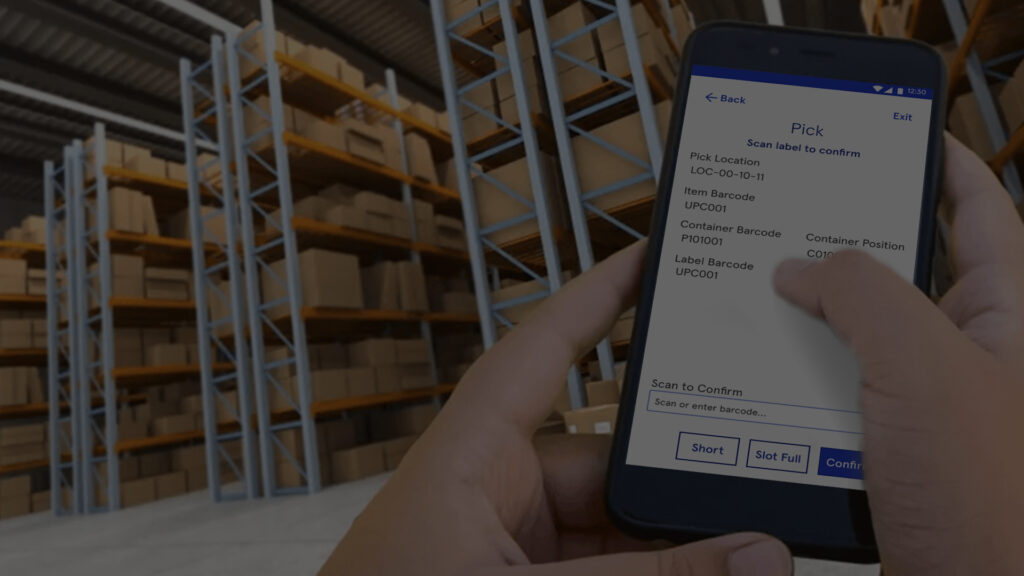
Fortna’s warehouse operators and supervisors were navigating a fragmented, screen-heavy desktop system that slowed down critical warehouse operations. Decanting, picking, packing, and cycle counting flows required excessive screens, created cognitive overload, and lacked the visual hierarchy needed for fast-paced operational environments.
My Role
As Manager of UX Design, I led the end-to-end redesign of Fortna’s Warehouse Execution System (WES), Warehouse Control System (WCS), and Optislot — directing the design of 20+ operator flows, a multi-role KPI dashboard suite, and a comprehensive design system. I partnered with product, engineering, and operations teams across multiple client deployments to ensure solutions met real-world operational demands.
THE PROCESS
Discover
Before a single screen was redesigned, I spent time on the warehouse floor — observing operators during live decant, pick, pack, and cycle count operations. I conducted structured interviews with operators, supervisors, GMs, and technicians across multiple client sites to understand not just what the system did, but how people actually used it under pressure. Key research findings pointed to three consistent pain points: excessive screen counts forcing unnecessary navigation, poor visual hierarchy making critical information hard to locate quickly, and a lack of role-appropriate views that forced supervisors to use the same interface as floor operators despite having fundamentally different needs.
Define & Design
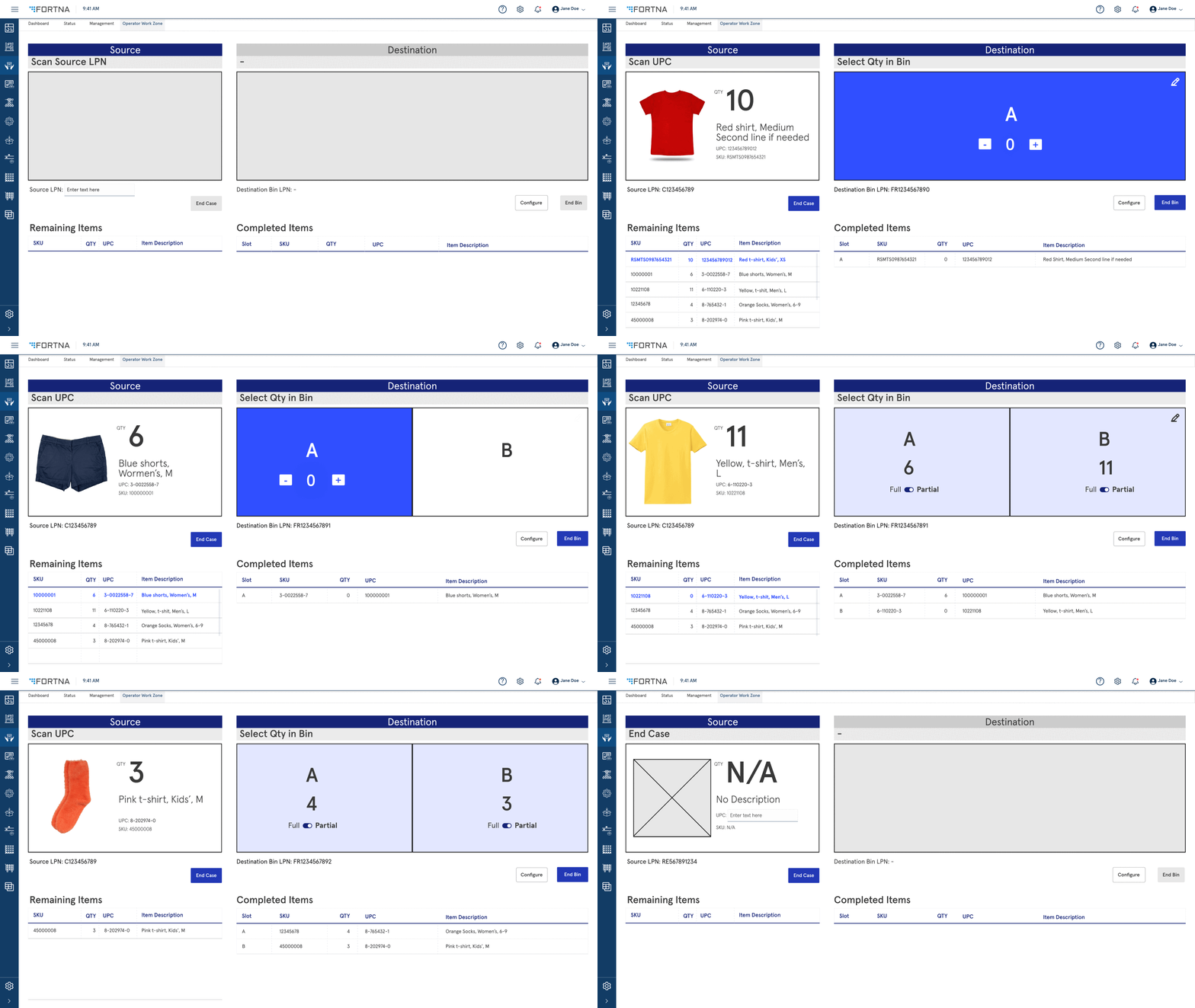
With a clear picture of the problem space, I defined a design strategy built around three principles: reduce, clarify, and differentiate. Reduce the number of screens required to complete each flow. Clarify the visual hierarchy so operators could find critical information at a glance. Differentiate the experience by role — giving supervisors, GMs, and technicians purpose-built dashboard views rather than a one-size-fits-all interface. I designed 20+ operator flows for the WES system, a modular component architecture that could be hot-swapped across flows without custom development, and a KPI dashboard suite with three distinct role-based views. All designs were built within a unified design system to ensure consistency across the entire platform.
Deliver & Measure
Designs were validated through a rigorous double-blind A/B testing process with 200+ participants — split between experienced warehouse professionals and individuals with no warehousing background. The double-blind methodology ensured objective feedback, and results were consistent across both groups, confirming that the redesigned flows were intuitive regardless of prior experience. Post-validation, I partnered closely with engineering teams through implementation, reviewing builds against design specifications and iterating where needed to close the gap between design intent and shipped product.
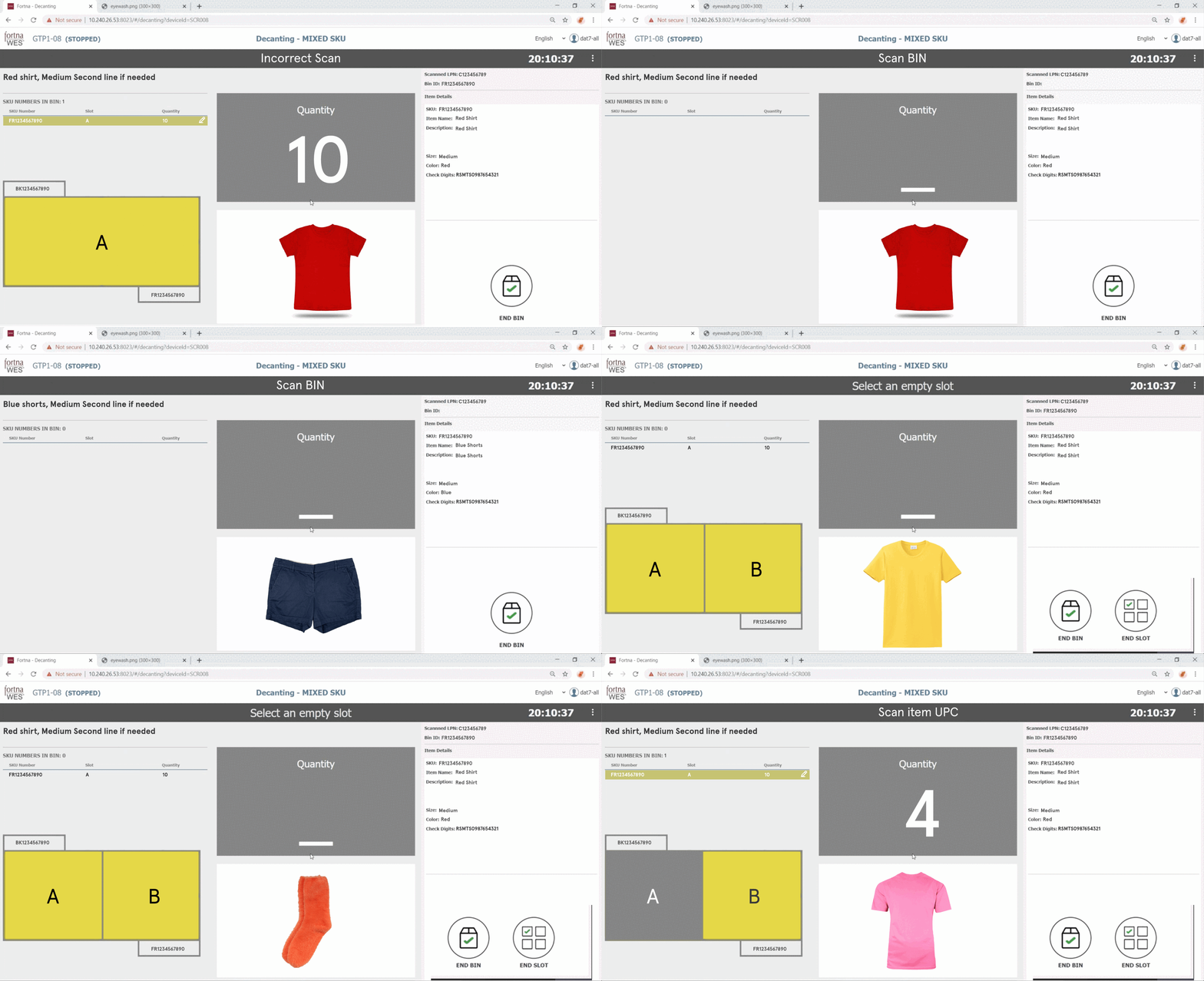
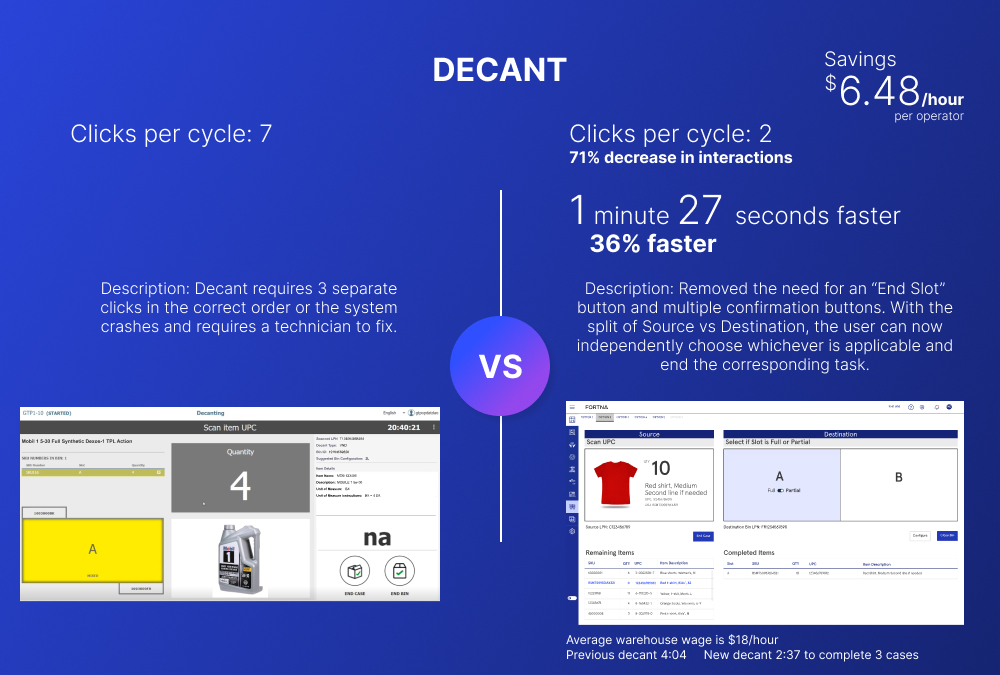
One of my most significant contributions was redesigning the decant flow process. The following animated GIFs illustrate the dramatic transformation that resulted from my designs. Each flow is the same amount of work and reduces from 26 clicks to 13.
Old Design
New Flow with 50% reduction in screens.
20+
Operator Flows Designed
50%
Reduction in Screen Count
32%
AVG Improvement in Processing Speed
1
Modular Platform Architecture
In Summary
Key outcomes across the full WES redesign include:
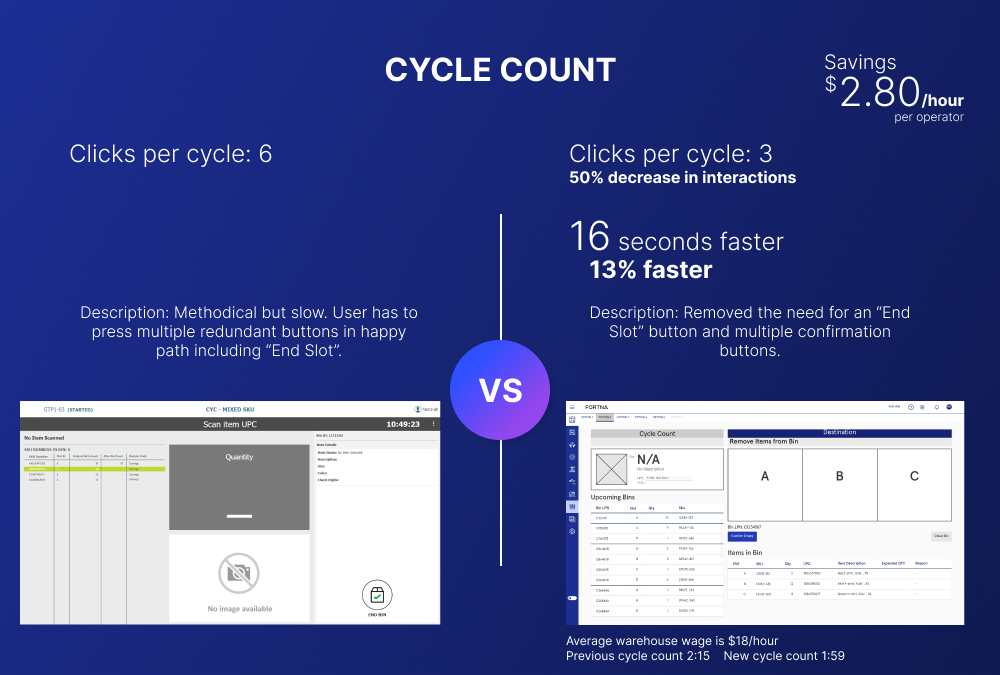
50% Reduction in Screen Count: Simplified workflows to eliminate unnecessary screens, streamlining the user experience.
Enhanced Navigation: A more intuitive layout that reduces cognitive load and increases user efficiency.
Improved Visual Design: Reduced screen flicker and flash to minimize eye strain and improve comfort during extended use.
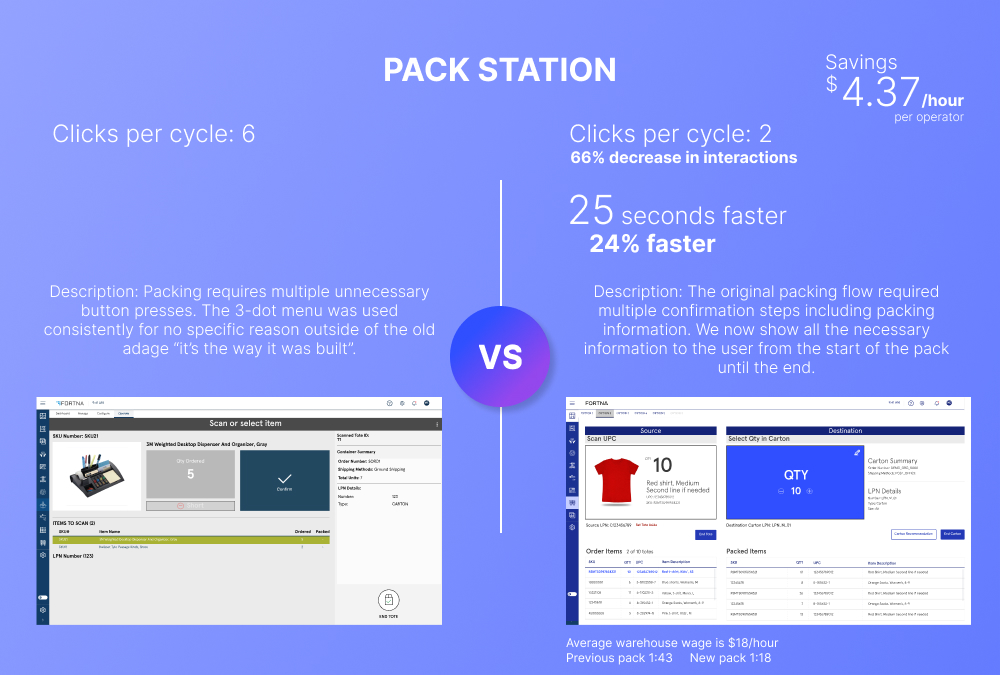
Modular Design: Every flow has near identical steps taken, ensuring faster training and fewer misclicks.
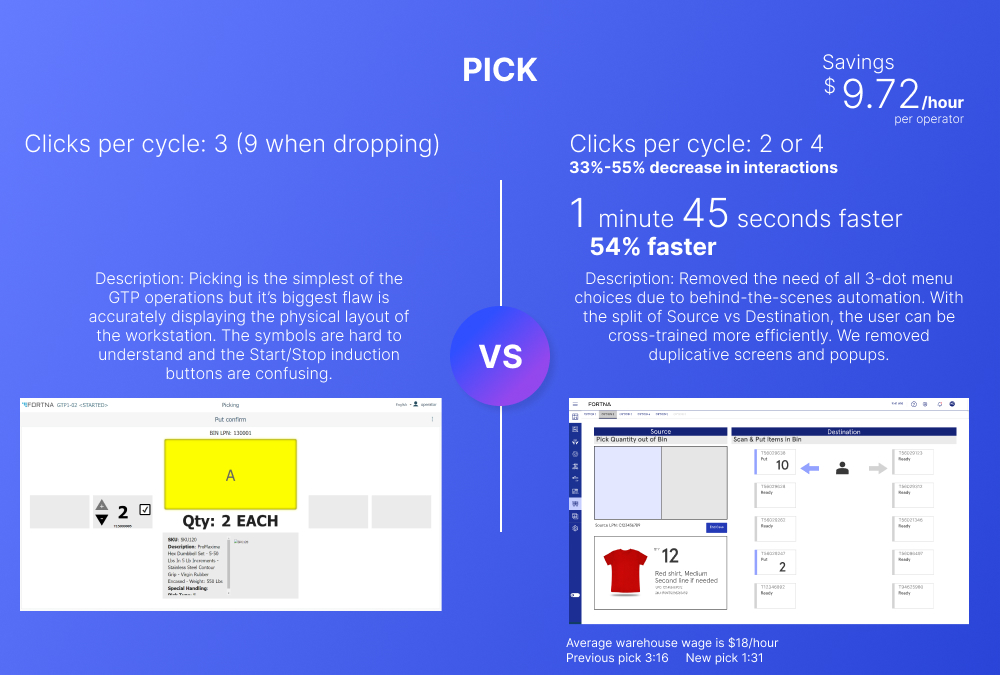
32% Faster Process overall: A performance boost that directly impacts operational efficiency, resulting in measurable time savings.
These results were derived from A/B testing with 200+ participants, split between industry professionals and individuals with no warehousing experience. Despite varying backgrounds, the results were consistent across the board, demonstrating the universal effectiveness of the new design. The tests were double-blind to ensure objective feedback, meaning participants were unaware of the design changes or which version they were interacting with.
Additional Work
Beyond the decant flow showcased above, this project encompassed 20+ operator flows across WES, WCS, and Optislot, plus a full KPI dashboard suite. Due to security and confidentiality protocols, I’m unable to publicly share all designs, but I’m happy to provide a detailed walkthrough in a live setting or video conference