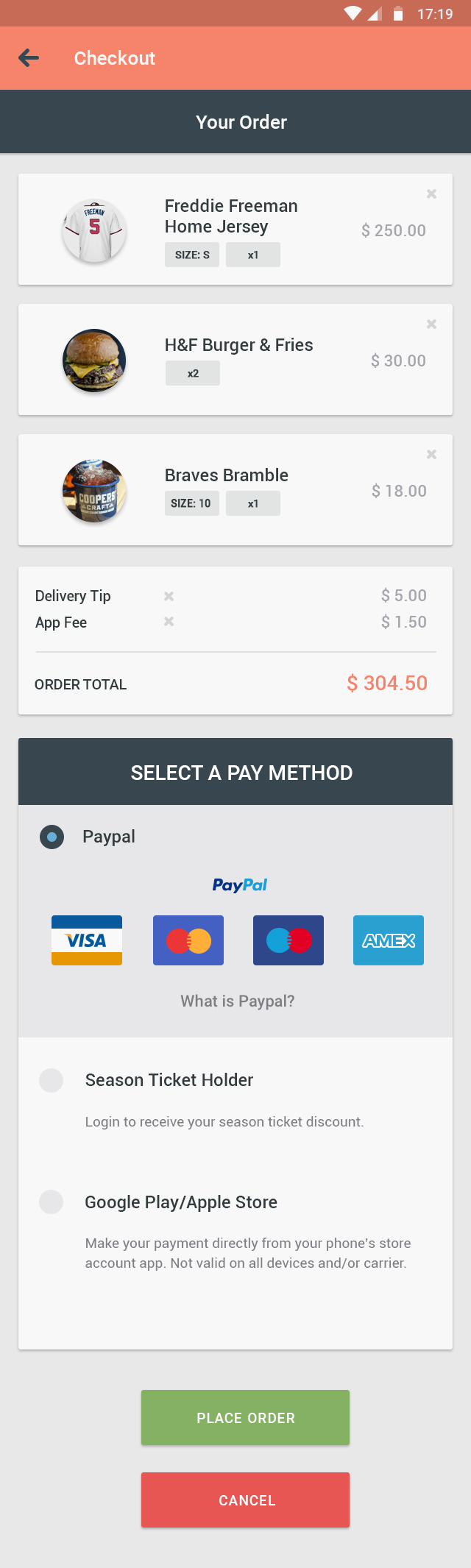
Large venues like stadiums and arenas offer a fundamentally broken food and merchandise experience. Long lines, missed plays, and limited purchasing options leave fans frustrated and venues with significant unrealized revenue. The challenge was to design a seamless in-seat delivery experience that could handle the complexity of a large venue — variable seating configurations, high concurrent order volumes, dynamic pricing, and real-time delivery coordination — all through a consumer-facing mobile interface that had to be intuitive enough to use in the middle of a live event.
Project Scope
sEAT was designed and developed entirely by me — frontend GUI, backend CMS on Magento, dynamic pricing engine, and the full end-to-end user experience. This was a concept project that never reached market, but it represents one of the most technically and creatively ambitious projects in my portfolio — pushing the boundaries of mobile UX in high-traffic, high-pressure venue environments.
My Role
As the sole designer and developer, I owned every layer of this project — from concept and UX strategy through interaction design, visual design, frontend GUI development, and backend CMS implementation on Magento. I designed the complete user journey from service selection through order confirmation, built dynamic pricing and purchasing functionality, and created a system flexible enough to support multiple venue configurations and service types.
The Process
— Discover With no direct precedent for in-seat stadium delivery at this scale, research started with the fan experience itself. I mapped the friction points in a typical stadium visit — concession lines averaging 15+ minutes, merchandise locations requiring fans to leave their seats, and no digital ordering option of any kind. I studied existing food delivery UX patterns from consumer apps and identified the key differences in a venue context: users are distracted by a live event, often ordering in groups, under time pressure between plays, and may have limited mobile connectivity in a packed stadium.”
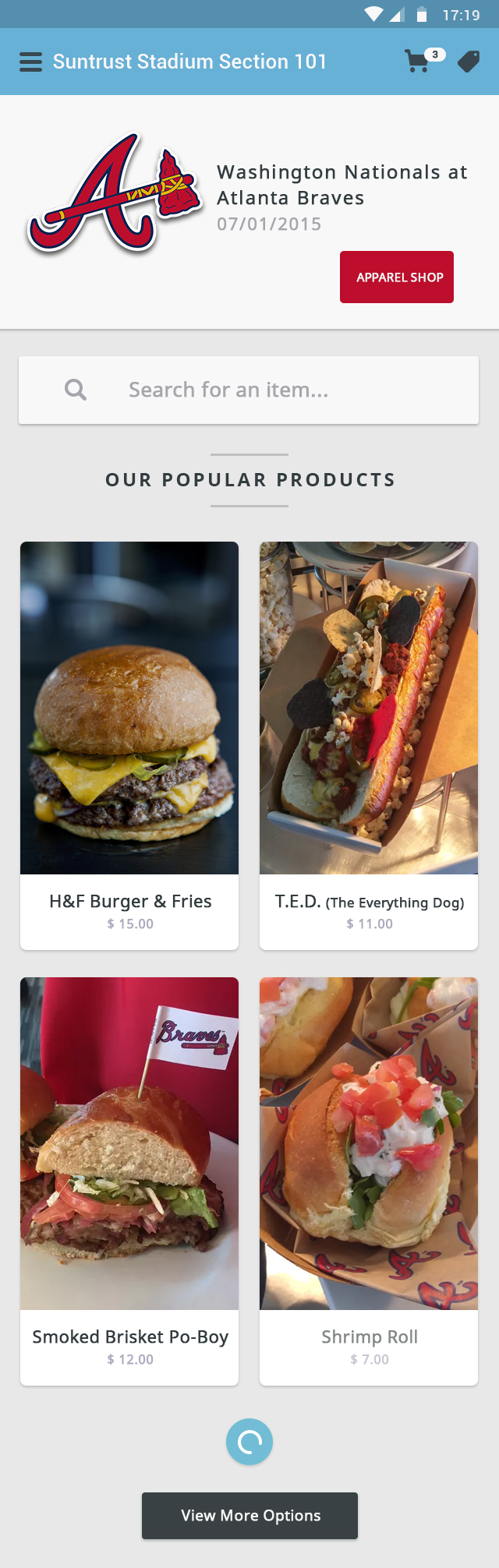
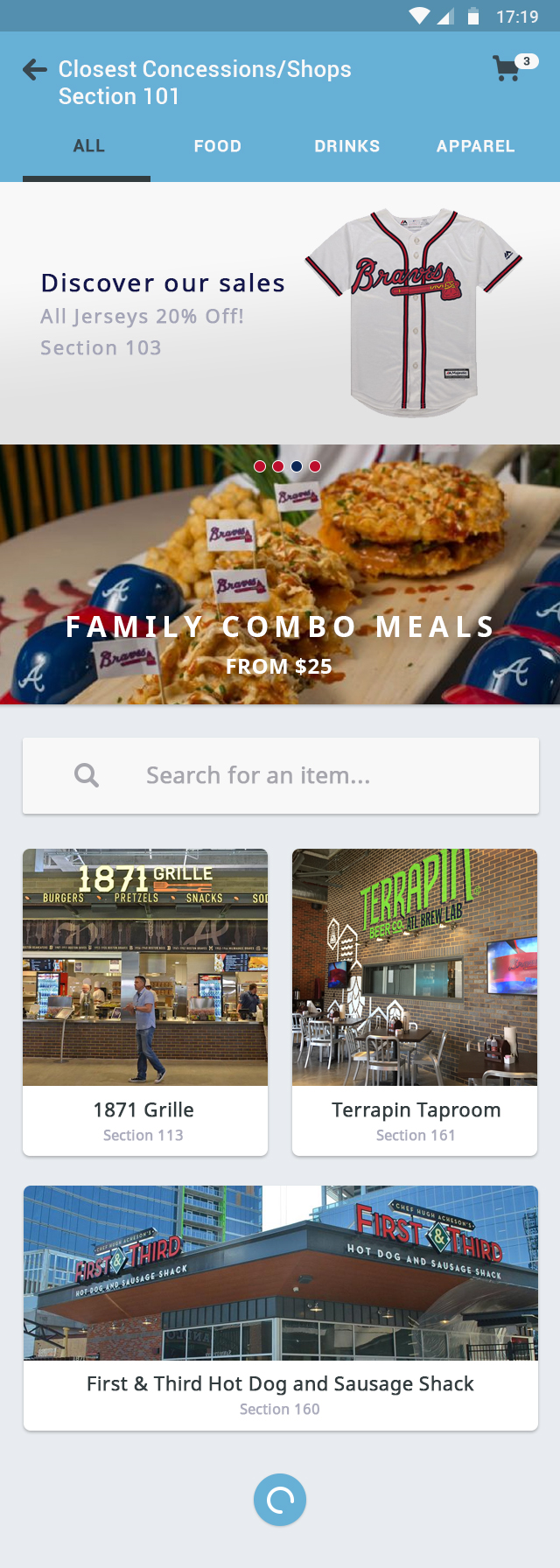
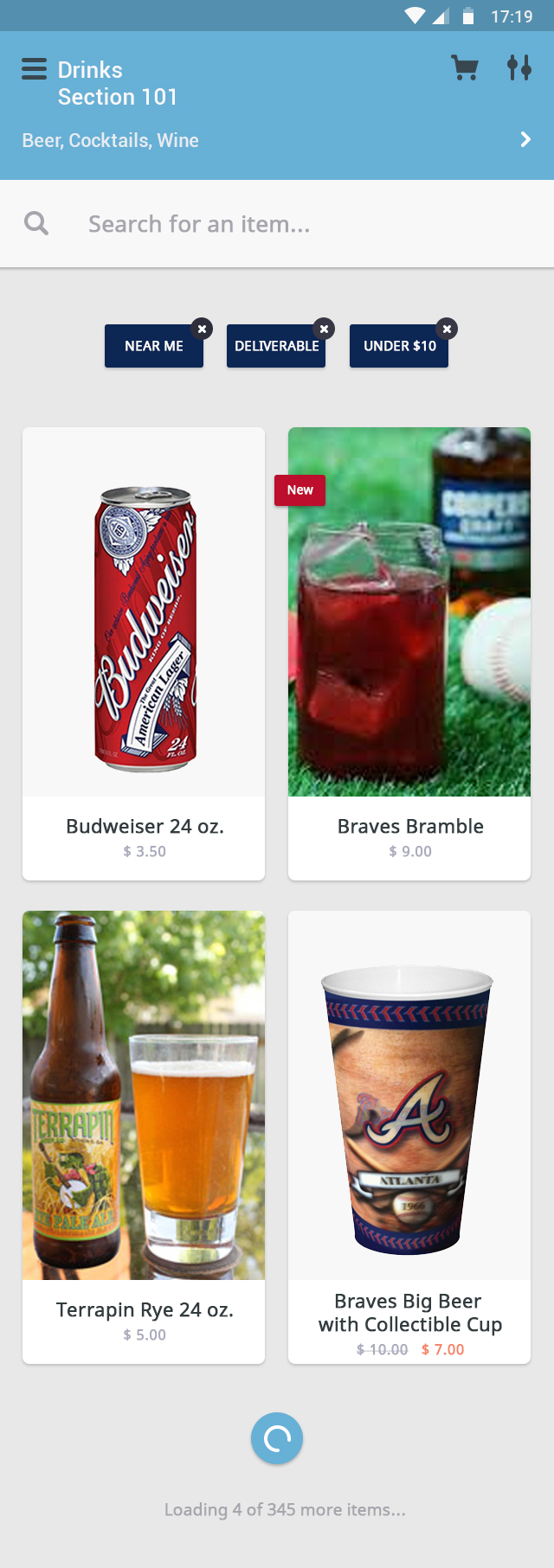
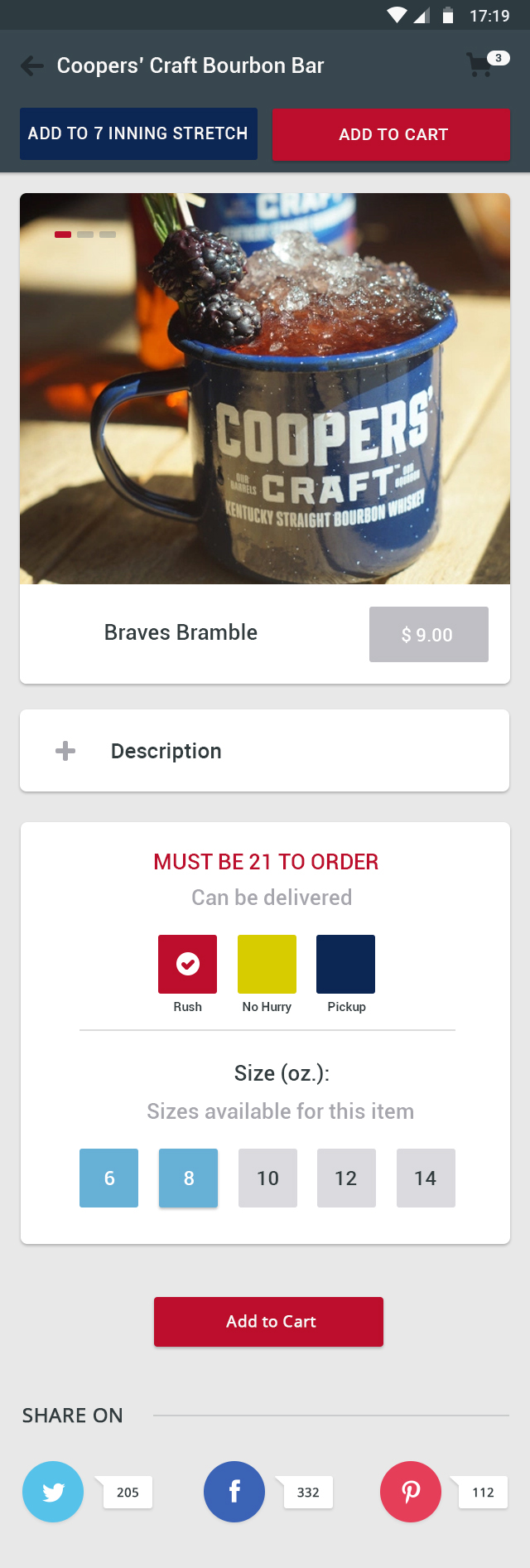
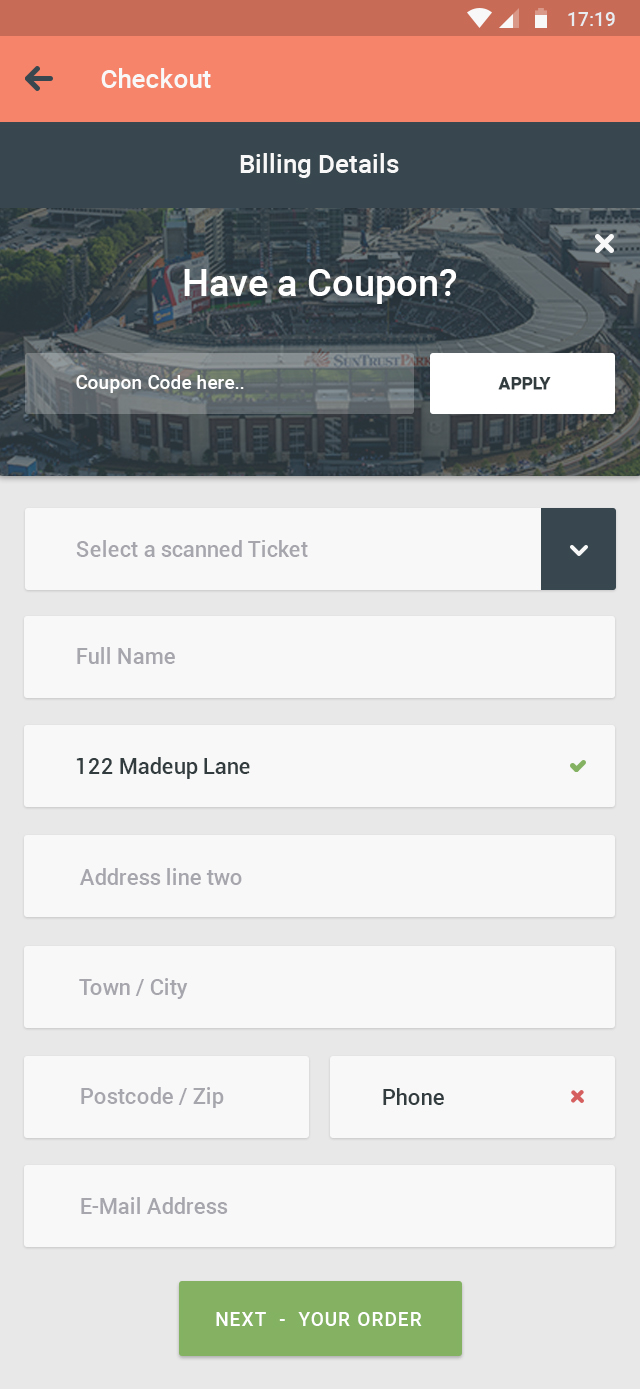
— Define & Design The design strategy centered on speed and simplicity — every flow needed to be completable in under 60 seconds without requiring the user’s full attention. I designed six core screens covering the full purchase journey: service type selection, personalized recommendations, product browsing, product detail, billing, and order confirmation. Dynamic pricing was integrated directly into the browsing experience rather than revealed at checkout — a deliberate UX decision to build trust and reduce abandonment. The backend CMS was built on Magento, customized to support multiple venue configurations, service zones, and real-time inventory management.
— Deliver & Measure While sEAT was never brought to market, the project was completed to a fully functional prototype and design-ready state. All six core user flows were designed, documented, and validated for usability. The concept demonstrated that a seamless in-seat delivery experience was technically and experientially achievable — and the patterns developed here directly informed my later work on consumer-facing mobile UX.
The Results
6
Core User Flows Designed
1
Fully Functional Prototype Delivered
2
Platform Layers Built
0
Compromises on UX Execution Despite Solo Execution
In Summary
End-to-End Ownership: Sole designer and developer across frontend UX and backend CMS
Consumer-First Thinking: Designed for distracted, time-pressured users in a live event environment
Technical Depth: Built dynamic pricing, multi-venue configuration, and real-time inventory management into the platform
Concept to Prototype: Delivered a fully functional, design-ready prototype despite never reaching market — demonstrating initiative and follow-through on complex technical challenges